EX COMMANDER-IN-CHIEF OF UKRAINE’S ARMED FORCES WARNS UK & EUROPE: PORT SECURITY MUST BE A STRATEGIC PRIORITY TO SAFEGUARD SUPPLY CHAINS
General Dr Valeril Zaluzhnyi, Ambassador Extraordinary and Plenipotentiary of Ukraine to the United Kingdom and Northern Ireland, who is also the Chairman of The Advisory Board of International Humanitarian College of London (IHCL), warns and urges allies to treat critical maritime infrastructure as a frontline defence priority.
General Dr. Valerii Zaluzhnyi, who is former Commander-in-Chief of the Armed Forces of Ukraine, has issued a stark warning to the United Kingdom and European Union member states: the security of major ports and maritime supply routes must be elevated to the highest levels of strategic and defence planning without delay.
Speaking from his position at the intersection of active conflict experience and diplomatic engagement, General Zaluzhnyi has drawn on lessons learned during Ukraine’s ongoing defence against Russian aggression, a conflict in which the targeting of critical infrastructure, including ports and logistics corridors, has been used as a deliberate instrument of warfare. He cautions that Europe cannot afford complacency.
“We have witnessed, at devastating cost, what happens when adversaries target the arteries of supply and logistics. Ports are not merely commercial assets, they are strategic infrastructure. A cyber-attack or physical assault on a major European port could paralyse military resupply, humanitarian aid, and civilian economies simultaneously. This is not a hypothetical risk. It is a doctrine already being employed against us in Ukraine.”
— General Dr. Valerii Zaluzhnyi
The threat landscape: Cyber and physical vulnerabilities
General Zaluzhnyi has specifically identified two categories of risk that demand urgent attention from allied governments and port authorities across the United Kingdom and Europe.
1 - Cyber threats. Modern ports rely on deeply integrated digital systems, from automated cargo handling and vessel tracking to customs processing and energy management. A coordinated cyberattack on port management systems could halt operations entirely, disrupt the flow of military materiel and humanitarian supplies, and create cascading failures across interconnected national infrastructure. General Zaluzhnyi urges NATO allies and EU member states to treat port cyber resilience with the same urgency applied to defence networks.
2 - Physical attacks. Ukraine’s experience has demonstrated the capacity of state-sponsored actors to conduct precision strikes on port facilities, fuel depots, and logistics hubs. European ports — including major UK facilities — remain potential targets in any sustained hybrid conflict scenario. Physical hardening of port perimeters, strengthened access controls, and close integration between port operators and national defence authorities are among the measures General Zaluzhnyi recommends.
A call to allied action
General Zaluzhnyi has called on the United Kingdom government, alongside EU member state administrations, to take the following steps as a matter of priority:
- Conduct comprehensive threat assessments of all major commercial and strategic ports, incorporating both cyber and physical risk vectors.
- The importance of education, training and continuous professional development for port staff via short courses and dedicated instruction.
- Establish joint civil-military command structures with clear authority and protocols for port security during periods of heightened threat.
- Invest in redundant digital infrastructure and offline contingency systems to ensure ports can continue to function during a cyberattack.
- Share intelligence and threat data on hostile actor activity across NATO allies and EU member states in real time.
- Develop and rehearse contingency plans for maintaining the continuity of supply chains — including defence logistics — in the event of a major port being rendered inoperable.
- Engage port operators, shipping companies, and logistics providers as essential partners in national resilience planning.
Resilience as a strategic imperative
General Zaluzhnyi’s, who is also the Chairman of The Advisory Board of International Humanitarian College of London, warnings come at a moment of heightened concern across European capitals regarding hybrid warfare tactics employed by state actors. His remarks align with a broader strategic consensus that critical national infrastructure, energy grids, communications networks, and transport hubs, represents the new frontline in modern conflict.
The General’s perspective carries particular authority given his direct experience commanding Ukraine’s armed forces through three years of full-scale conflict, during which the protection and disruption of supply lines has proven decisive. He emphasises that the window for preparatory action is narrowing and that allied governments must move from policy discussion to concrete implementation.
“Every week of inaction is a week that our adversaries use to probe, plan, and position. Europe’s ports are a gift to those who wish to destabilise our societies and sever our alliances. We must not offer that gift freely.”
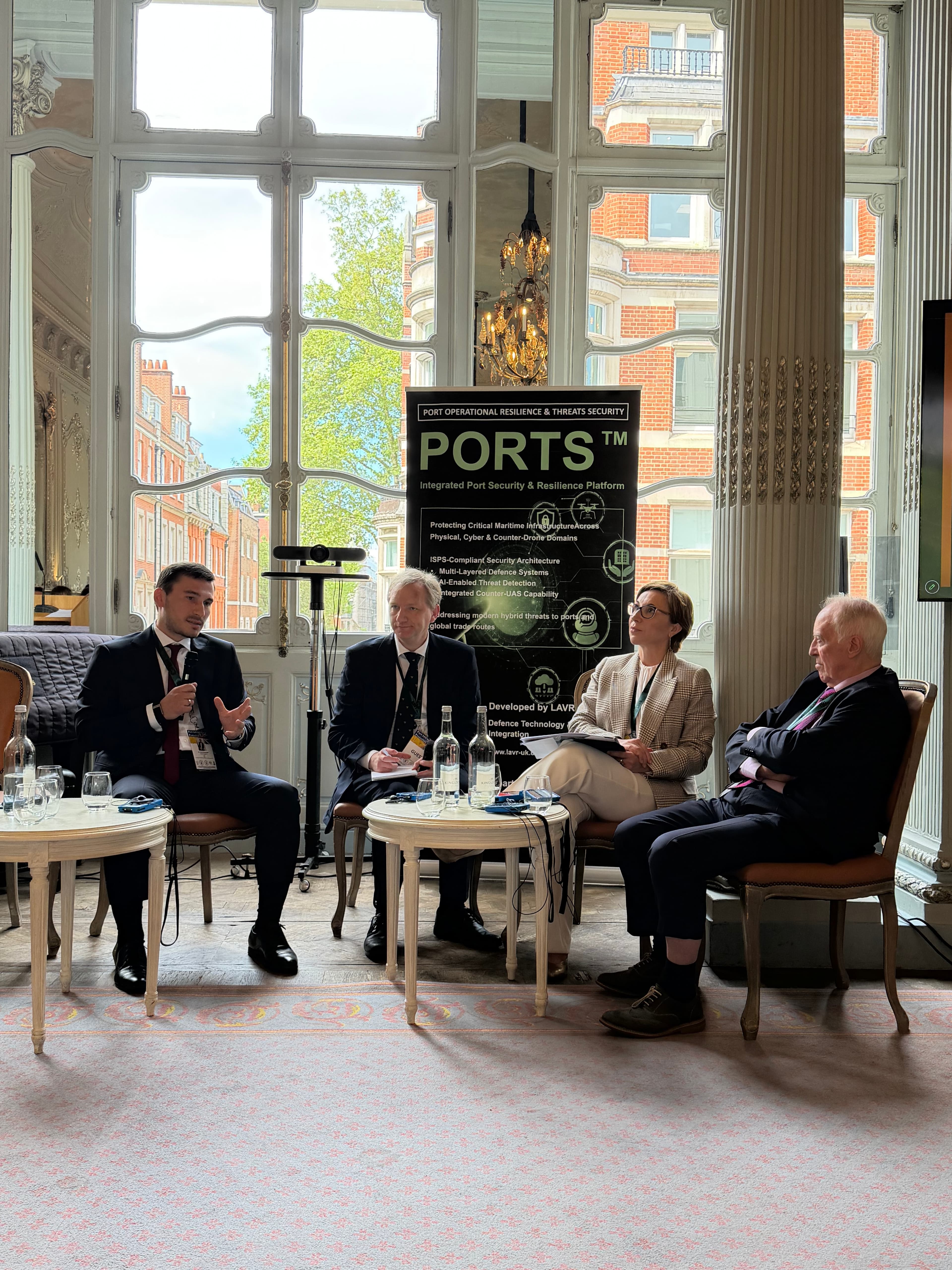
IHCL is partnering with key industry suppliers and ports authorities to offer dedicated training for modern conflicts, whether cyber or physical, offering students and port staff greater flexibility at site of work or on-line and individualised learning.
6 May 2026